Improve smallholder coffee farmers’ livelihoods and climate resilience in East Africa, through improved access to quality extension services and sector preparedness for EUDR and CS3D.
Partners
Introduction
Smallholder coffee farmers in Kenya and Uganda earn significantly less than a living income, leaving them ill-equipped to address structural challenges.
In the short-term, these farmers face losing market access if they cannot comply with new importing countries’ regulations, such as the European Union Deforestation Regulation (EUDR) and the Corporate Sustainability Due Diligence Directive (CS3D). In the long-term, the effects of climate change may further diminish their already sub-optimal coffee yields.
Coffee farming’s low economic viability restricts producers from preparing for these challenges, increasing the risk of next-generation farmers leaving the sector and threatening future supply and long-term sustainability.
Challenges being addressed
Low productivity
1/3 or 1/4 of potential
Old trees not maintained
Insufficient extension systems
to provide training on Good Agricultural Practices
Climate change threatens yields
Farmers unprepared
for new importing market regulations
Uneven governance and management
of cooperatives in Kenya
About the program
Through a collective €2 million investment, GCP has brought together leading coffee companies and the German Federal Ministry for Economic Cooperation and Development (BMZ) to improve smallholder farmers’ livelihoods, climate resilience, and the sustainability of coffee supply chains in Kenya and Uganda.
Building on GCP’s previous work, this program aims to tackle one of the key root causes hindering coffee farmers’ prosperity by piloting and expanding innovative solutions for bridging the gap in last mile extension services. The goal is to reach an additional 18,000 farmers across both countries not currently serviced by sustainability schemes or programs.
Target: Increase farmers’ coffee yields by 20% and incomes by 10% by the end of 2027
In Uganda:
Addressing the gap in last mile extension: grow the pool of entrepreneurial youth businesses that provide rehabilitation, rejuvenation, and agroforestry services.
Building on previous GCP initiatives: expand the GCP Collective Action Initiative “Youth for Coffee”, collaborating with a broader group of private sector companies to increase the geographic reach of Youth Business Units to more sourcing regions.
Ensuring post-program sustainability: link Youth Business Units with existing supply chains to develop a future client base for their services.
In Kenya:
Addressing the gap in last mile extension: capacitate new Master Trainers and link them to an existing cooperative to train farmers in sustainable agricultural practices.
Building on previous GCP initiatives: provide training based on the National Sustainability Curricula and increase price transparency by updating and sensitizing the Nairobi Coffee Exchange tracking tool* – this seeks to encourage more efficient cooperative practices and allow farmers to better forecast their income from coffee.
Ensuring post-program sustainability: deploy Master Trainers certified by Coffee Research Institute (CRI) for future extension services.
*Developed with the support of German Federal Ministry for Economic Cooperation and Development (BMZ)
In both countries, the program will also support ongoing public-private initiatives to improve sector preparedness for European Union regulations, specifically EUDR and CS3D.
Expected results
KENYA
UGANDA
40 new Master Trainers
trained by Coffee Research Institute (CRI)
75 Youth Business Units established
employing 150 youths to provide agricultural training and services
8,000 farmers from Othaya Cooperativereached
with training on sustainable farming practices
9,750+ farmers reached
with rehabilitation and rejuvenation training and services
Nairobi Coffee Exchange (NCE)
price tracking tool updated & sensitized
487,500 coffee trees rehabilitated and 7,500 seedlings distributed
EUDR & CS3D improved preparedness
by enabling EUDR Taskforce convenings and sector sensitization via the Kenya Coffee Platform
EUDR & CS3D improved preparedness
through supporting the public-private EUDR working group and sector sensitization via the Uganda Coffee Platform
About the partnership
This partnership forms part of GCP’s Collective Action for Farmer Prosperity and brings together private sector GCP Members – ECOM, JDE Peet’s, Louis Dreyfus Company, ofi (Olam Food Ingredients), SUCDEN, Taylors of Harrogate and Touton – to collectively leverage resources and expertise alongside GCP-affiliated Country Platforms.
The commitment of these GCP Members expands collective action by working with the Sustainable Agricultural Supply Chains Initiative (SASI). SASI focuses on improving social, environmental and economic conditions along agricultural supply chains, and it is funded by the German Federal Ministry for Economic Cooperation and Development (BMZ) and implemented by the Deutsche Gesellschaft für Internationale Zusammenarbeit (GIZ) GmbH.
GCP-affiliated Country Platforms in Kenya (Kenya Coffee Platform) and Uganda (Uganda Coffee Platform, hosted by Café Africa Uganda) will lead program coordination and ensure lessons learned feed into national coffee discussions for even broader impact.
An Advisory Group of the partners has been established to provide strategic guidance, fundraising support, and to identify and mitigate potential supply-chain risks, with overall facilitation by GCP.
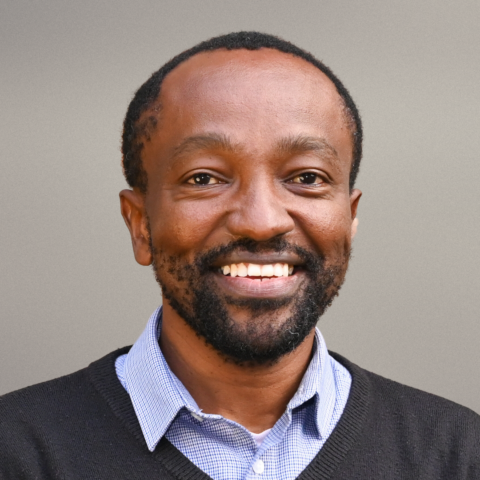
George is the Program Manager of the Kenya Coffee Platform and is in charge of implementing all GCP initiatives and convening efforts in the country. He has also supported GCP’s Monitoring, Evaluation and Learning work, including the Delta Framework. Recently, George has overseen a Living Income benchmarking study for coffee growers in the Mount Kenya region, funded by GIZ.
Prior to joining GCP, George was the Regional Certification Manager at Technoserve’s East Africa Coffee Initiative and before that he served as the acting General Manager of Africert Limited.
George holds an MSc in Environment and Resource Management from the Institute of Environmental Studies (IVM), Vrije Universitiet, Amsterdam.
Samson Emong brings 10 years of experience working in the Uganda coffee value chain. He joined Café Africa in February 2015 who are the secretariat of the Uganda Coffee Platform and is in charge of convening and communicating with stakeholders of the platform. He was appointed CEO of Café Africa Uganda in 2025. He is also the GCP coordinator in Uganda and is in charge of implementing the country plan for GCP in Uganda with the objective of ensuring platform maturity.
He holds a Bachelor’s Degree in Development Studies and a Masters’ degree in Business Administration. Samson is highly commended for his networking skills.
To view this website with maximum quality including all diverse content and services, we make use of cookies. We need your allowance to set these. Details can be found in our PRIVACY POLICY.