| Member | Organization |
|---|---|
| Jeremy Lefroy | Café Africa (Chair) |
| Dr. Álvaro Gaitan | Cenicafé |
| Cesar Candiano | Research |
| Anneke Fermont | Volcafé |
| Karugu Wa Macharia | Kenya Coffee Platform (KCP) |
| Yuri Tavares | 4C Services |
| Miguel Gamboa | Rainforest Alliance |


GCP’s Coffee Sustainability Reference Code (Coffee SR Code) and Equivalence Mechanism (EM) are under review in 2026 to ensure these key sector sustainability tools remain relevant, credible, and practical for advancing sustainability. This review process reflects changes in the sustainability landscape, evolving stakeholder expectations, and lessons learned from the application of both tools since their launch and will be conducted in line with the ISEAL Code of Good Practice and GCP’s 2030 Goal.
GCP is reviewing the Coffee Sustainability Reference Code (Coffee SR Code) and Equivalence Mechanism (EM) during the course of 2026. Both tools are being reviewed together to ensure coherence and continued relevance.
The Coffee SR Code was developed as a common language for baseline sustainable coffee production, centered on economic prosperity, social well-being, and environmental stewardship.

A tool designed to recognize alignment between sustainability schemes and the Coffee Sustainability Reference Code, supporting comparability and mutual understanding across the sector.

The coffee sector continues to face complex challenges, including climate change, regulatory developments, market expectations, and the need for greater alignment and efficiency across sustainability initiatives.
The review of the Coffee SR Code and Equivalence Mechanism aims to:
The review process is designed to be transparent, inclusive, and evidence based. It includes:
Details on specific technical adjustments will be shared as the review progresses.
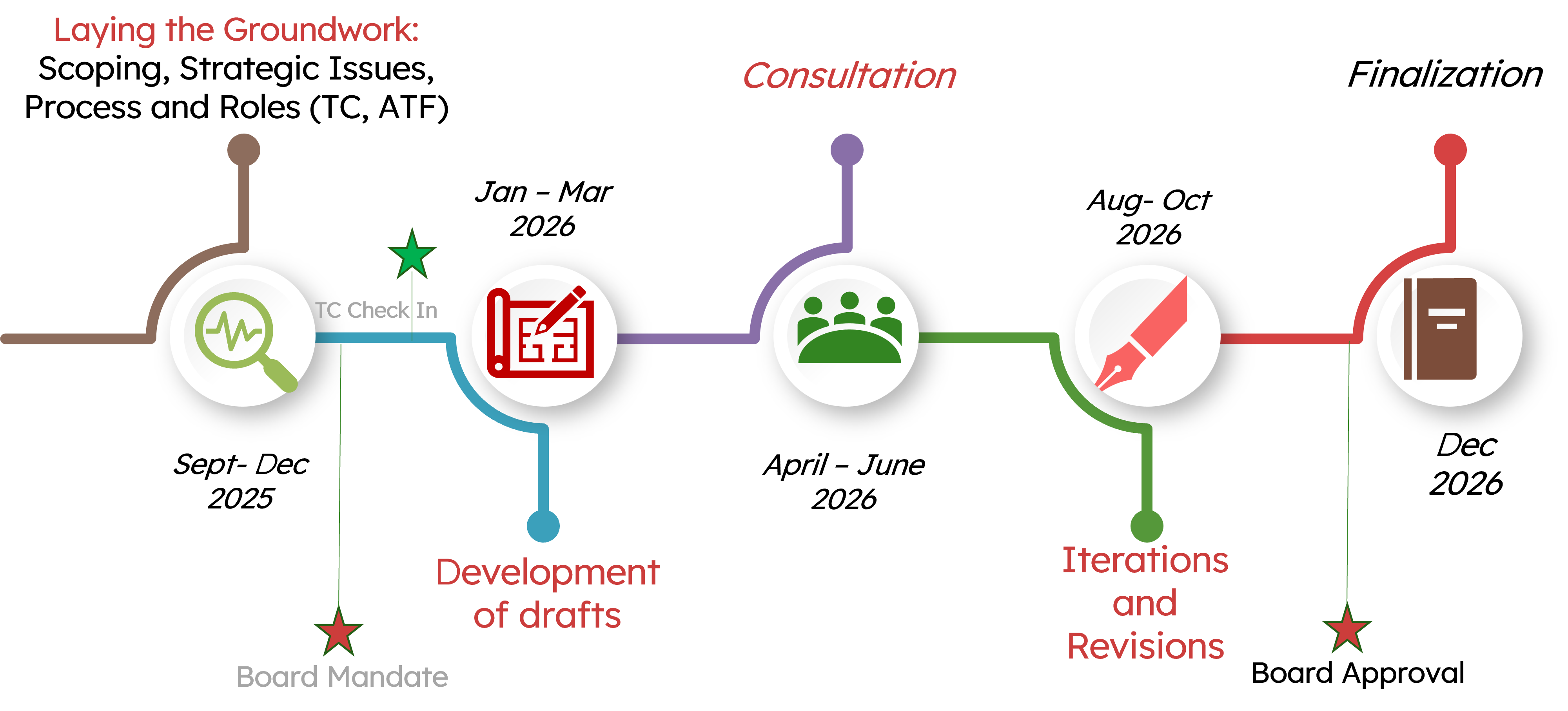
The Review Process is being guided by GCP’s Technical Committee, responsible for technical review, drafts revisions, and prepares recommendations for the Board; the Advisory Task Force, which ensures diverse perspectives and high-level sector expertise in support of TC decision-making; and included contributions from GCP Members and participants from around the globe, who supported with their perspective from across the supply chain through the consultation process.
The GCP Secretariat facilitates the work with the support of Aimee Rusillo, external consultant from Liseed Consulting.
| Member | Organization |
|---|---|
| Jeremy Lefroy | Café Africa (Chair) |
| Dr. Álvaro Gaitan | Cenicafé |
| Cesar Candiano | Research |
| Anneke Fermont | Volcafé |
| Karugu Wa Macharia | Kenya Coffee Platform (KCP) |
| Yuri Tavares | 4C Services |
| Miguel Gamboa | Rainforest Alliance |
| Member | Organization |
|---|---|
| Stefan Canz | Nestlé |
| Nadia Hoarau-Mwaura | JDE Peet’s |
| Francesca Pellis | illy |
| Brooke Cantrell | Westrock Coffee |
| Raja Saoud | ofi |
| Carolin Ehrensperger | NKG |
| Allie Stauss | KDP |
GCP conducted a public consultation between 19 May and 19 June 2026, as part of the 2026 review process of the GCP Tools. During that period, GCP received more than 780 comments from stakeholders across 24 different countries, including producers, traders, roasters, sustainability schemes, civil society organizations, researchers, service providers and other associations and actors. Approximately half of all respondents were GCP Members, reflecting strong member engagement while also providing insights from the broader coffee sector.
Participants showed overall support for the proposed direction, updates and changes of the Coffee SR Code and Operational Requirements of the Equivalence Mechanism. The proposed revisions focus on improving clarity, strengthening implementation guidance and clarifying specific requirements.
GCP thanks all stakeholders for their participation in the consultation, as it is key to ensure that these tools remain effective, practical and credible. A summary of the results of the process is now available.
This page will be regularly updated as the review progresses. We invite all stakeholders to stay connected through GCP’s website, by subscribing to our newsletter, and following our social media channels for updates and upcoming opportunities to participate in the review process.
