PARTNERSHIP
Collaboration Paves the Way for a Common Vision for Responsible Coffee Procurement
GCP, GIZ, IDH and Solidaridad announce the development of a Coffee Sector Guidance for Responsible Procurement.

PARTNERSHIP
GCP, GIZ, IDH and Solidaridad announce the development of a Coffee Sector Guidance for Responsible Procurement.
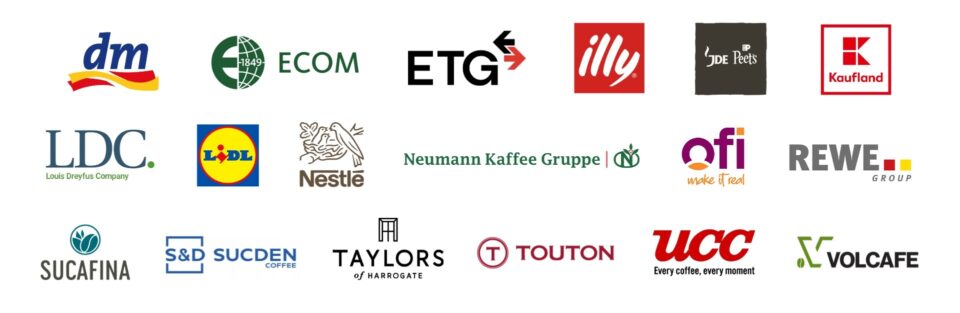
GCP, Deutsche Gesellschaft für Internationale Zusammenarbeit (GIZ), IDH and Solidaridad have announced their collaboration to jointly develop a Coffee Sector Guidance for Responsible Procurement. The collaboration brings together stakeholders from across the coffee value chain to create a practical framework to define and inspire adoption of responsible procurement practices that contribute to farmer prosperity and supply chain resilience. Eighteen leading companies have stepped forward to champion the joint development of the Sector Guidance, showcasing their dedication, expertise, and active support.
Facilitated by the Sustainable Food Lab (SFL), the workstream builds on complementary work undertaken by the four organizations. GIZ has worked with German retailers through the Sustainable Agricultural Supply Chains Initiative (SASI), funded by Germany’s Federal Ministry for Economic Cooperation and Development (BMZ), while GCP, IDH and Solidaridad collaborated with roasters and traders to develop Coffee Common Procurement Principles. By joining forces, the organizations aim to create a shared vision and sector-wide common framework that can help align procurement practices across the coffee sector.
At the heart of the workstream is the recognition that the future of coffee depends on the prosperity and resilience of the millions of smallholder farmers and workers who produce it. Despite the significant value generated throughout global coffee supply chains, many producers continue to earn incomes below the living income benchmark. At the same time, climate change, volatile markets, rising production costs and limited access to finance continue to place increasing pressure on farming communities, threatening both livelihoods and long-term sustainability of coffee production and supply.
The partners (GCP, GIZ, IDH and Solidaridad) of the workstream acknowledge that “creating a sustainable future for coffee requires more than improving production practices alone.” and are convinced that “how coffee is purchased has a profound impact on farmers’ livelihoods, investment capacity and long-term resilience; Procurement is one of several levers that can drive progress to improve farmer prosperity and supply resilience; however, lasting change can only be achieved through collaboration across the entire value chain, from producers and exporters to traders, roasters, and retailers.”

The Coffee Sector Guidance for Responsible Procurement will provide companies with a practical reference to strengthening purchasing practices and align commercial decisions with sustainability objectives in support of long-term supply resilience. Covering all coffee sourcing, the Guidance will build on the foundational Common Procurement Principles (CPP), and adapt relevant general procurement frameworks, including the Ethical Trading Initiative’s Common Framework for Responsible Purchasing Practices in Food. This aims to support the operationalization of the CPPs in the coffee sector, providing further structure and practical guidance for discussion, implementation, and continuous improvement.
Producers, exporters, traders, roasters, retailers and civil society will all be actively engaged throughout the development process, contributing expertise and practical insights so that the Guidance is relevant, broadly applicable and reflects realities across the coffee value chain. These inputs will be essential in shaping a shared guidance that supports a thriving future for coffee and the people who produce it.
Throughout the development phase of the Sector Guidance, two more Learning Dialogues will be held. Leading companies championing the development of the Sector Guidance along the coffee value chain are invited to participate in this format to share experiences, explore innovations and incorporate lessons from coffee and other sectors.
The draft Sector Guidance will move into a public consultation phase through an open invitation to review the draft and share practical feedback.
The Global Coffee Platform (GCP) is a unique multi-stakeholder membership association of coffee producers, traders, roasters and retailers, civil society, associations, governments and donors, united under a common vision to work collectively towards a thriving, sustainable coffee sector for generations to come. GCP Members believe that sustainability is a shared responsibility to enhance farmers’ economic prosperity, improve well-being, and conservation of nature.
Deutsche Gesellschaft für Internationale Zusammenarbeit (GIZ), a federal enterprise, supports the German Government in achieving its objectives in the field of international cooperation for sustainable development. On behalf of Germany’s Federal Ministry for Economic Cooperation and Development (BMZ), GIZ’s Sustainable Agricultural Supply Chains Initiative (SASI) works with the German private sector, international partners and producer countries to strengthen sustainability in agricultural supply chains, including coffee, cocoa and other key commodities.
IDH is a global organisation that unlocks the full potential of agricultural markets to address complex social and environmental challenges. Drawing on nearly two decades of trusted experience, we turn market insight and practical expertise into solutions anchored in sourcing practices, partnerships and investment decisions. We help build systems that endure beyond our contribution, resulting in value chains that generate shared value for all.
Solidaridad is an international civil society organization with over 55 years of experience in developing solutions to make communities more resilient and create more sustainable supply chains. Our nearly 1,500 diverse staff work in more than 40 countries with a deep knowledge of local contexts. They work throughout the entire value chain to make sustainability the norm. Our innovative solutions support the transition to an inclusive economy that provides sustainable livelihoods with fair and profitable business opportunities. This includes decent working conditions, a fair living wage and production in balance with nature, so that all people can thrive now and for generations to come.
